

















The Dynamic Perception Lab
Dynamic Perception Lab

Our interaction with the physical world feels effortless, but it is anything but simple. From packing fragile groceries to stacking glassware or navigating a cluttered cabinet, every action we take depends on rapid predictions about stability, weight, balance, and motion. These predictions are generated continuously, online, and with remarkable precision, often without entering awareness. Seeing the world is only the first step; understanding how it will behave is what allows us to act.

Dynamic Perception in Action

Physical prediction Stability and balance Structural dynamics

I return home in the evening trying to leave a part of the day’s tiredness behind with every step, so that when I close the front door I do not find it waiting for me, sitting on the bed or in the kitchen, quietly heating water. I walk as the familiar line of concrete, trees, and traffic lights passes by like a film I have already seen many times. The sounds reach my ears and then fade away; I do not hold onto them or think about them further. I simply let the familiarity of this road guide me home, giving my mind the time it needs to clear itself of the day’s confusion and noise. The house smells of incense that has been left to burn. I take off my jacket, turn on some music, and fill a small pot to make herbal tea. I pick up the cup with automatic precision, a gesture repeated so often that it no longer requires effort. But this time, I watch myself. I begin to wonder how many of the movements I made, from the office door to this cup, actually depended on hidden calculations, predictions, and skills I have learned over time. How much unconscious control allowed me to avoid tripping over the slightly open manhole cover left after the street repairs? How much quick adjustment stopped me from being startled by the branch that had fallen onto the sidewalk, something that was not there yesterday? And how carefully did I control my strength so as not to throw my favorite cup into the air, considering how light it is compared to the force I can produce? What feels simple and natural is in fact supported by a quiet, constant coordination between perception, memory, and movement—an invisible effort that allows me to move smoothly through a world that is always, even slightly, changing.

Lab Gallery

A glimpse into our lab life, experiments, and team.

Our Team

Dr. Jason Fischer

Dr. Jason Fischer

Principal Investigator

Leads research at the intersection of visual perception and cognition, with a focus on intuitive physics—the mental systems that allow us to understand and predict physical behavior. His work explores how the brain transforms visual information into physical knowledge that guides everyday interactions with the world.

Giuliana Bucci-Mansilla

Giuliana Bucci-Mansilla

PhD Student

Giuliana Bucci-Mansilla explores visual dynamics in complex environments and their connection to cognitive processes like decision-making. Her research extends to comparative cognition, examining how different primate species solve physics problems to uncover shared and unique mechanisms across species.

Patrícia Fernandes

Patrícia Fernandes

PhD Student

Patrícia Fernandes holds a bachelor's degree in psychology and a master's degree in clinical neuropsychology, both from the University of Coimbra. She's currently a PhD student at the lab and collaborating with the Developmental Social Vision Lab from Bangor University. She's exploring the relationship between how we perceive and interact with the physical world (intuitive physics) and the social world (social cognition) across the brain and mind and from childhood to adulthood.

Pedro Dantas

Pedro Dantas

Master Student

Pedro Dantas holds a Bachelor's degree in Psychology from the University of Coimbra, where is currently pursuing his Master's degree in Clinical Neuropsychology. His main interests are in language, mental imagery and intuitive physics, with a broader curiosity for their neural representation and organization in the mind.

Yih-Shiuan Lin

Dr. Yih-Shiuan Lin 林易萱

Postdoc

As a visual neuroscientist, Yih-Shiuan applies her training in experimental psychology to investigate the mechanisms underlying human vision. She uses visual illusions as experimental tools, combining behavioral and neuroimaging methods to uncover how the brain computes perceptual experience. She is particularly interested in bridging low- and high-level visual processing. For example, she explores how classical visual illusions—such as the vertical–horizontal illusion—shape our physical judgments and predictions about the world.

Personal Website

Marta Parravicini

Marta Parravicini

Research Assistant

Marta Parravicini holds a Bachelor’s degree in Psychology from the University of Bergamo and a Master’s degree in Cognitive Sciences from the University of Milan, completed with an experimental thesis in Coimbra on real-world object interaction. Her interests lie in perception, action, and intuitive physics, with a broader curiosity for how neural and molecular processes shape behavior and the everyday balance—or sbilico—of experience..

Abdul-Rahim Deeb

Abdul-Rahim Deeb

Collaborator

Explores visual dynamics in complex environments and their connection to cognitive processes like decision-making. Her research extends to comparative cognition, examining how different primate species solve physics problems to uncover shared and unique mechanisms across species.

Alumni

Our lab alumni have gone on to pursue outstanding careers in academia, industry, and beyond.

Dr. Sarah Cormiea

Dr. Sarah Cormiea

Graduate Student

2017-2022

Postdoctoral Scholar
University of Pennsylvania

Dr. Ana Navarro-Cebrian

Dr. Ana Navarro-Cebrian

Research Scientist

2019-2021

Lecturer
University of Maryland, College Park

Taylor Washington

Taylor Washington

Research Program Coordinator

2019-2021

Dr. Li Guo

Dr. Li Guo

Graduate Student

2016-2020

User Experience Researcher
Google

Dr. Florence Campana

Dr. Florence Campana

Postdoctoral Scholar

2017-2018

Sachi Sanghavi

Sachi Sanghavi

Resident Game Development Guru

2016-2017

Technician
MIT

Dr. Su Keun Jeong

Dr. Su Keun Jeong

Postdoctoral Scholar

2016

Assistant Professor
Chungbuk National University

Alissa Lutz

Alissa Lutz

Research Program Coordinator

2016-2018

Alex Mitko

Alex Mitko

PhD Student

2020-2024

Cognitive architecture research

Garrett Goldin

Garrett Goldin

Master's Student

2022-2024

Neuroscience research

Samer Aslan

Samer Aslan

Master's Student

2023-2024

Deep learning applications

Abdul-Rahim Deeb

Abdul-Rahim Deeb

Master's Student

2023-2026

Deep learning applications

Join Our Team

We're seeking curious minds passionate about understanding how perception shapes our physical reality. If you're fascinated by the intersection of vision, cognition, and intuitive physics, we want to hear from you. Check our opportunities or reach out directly to explore collaboration possibilities.

Research

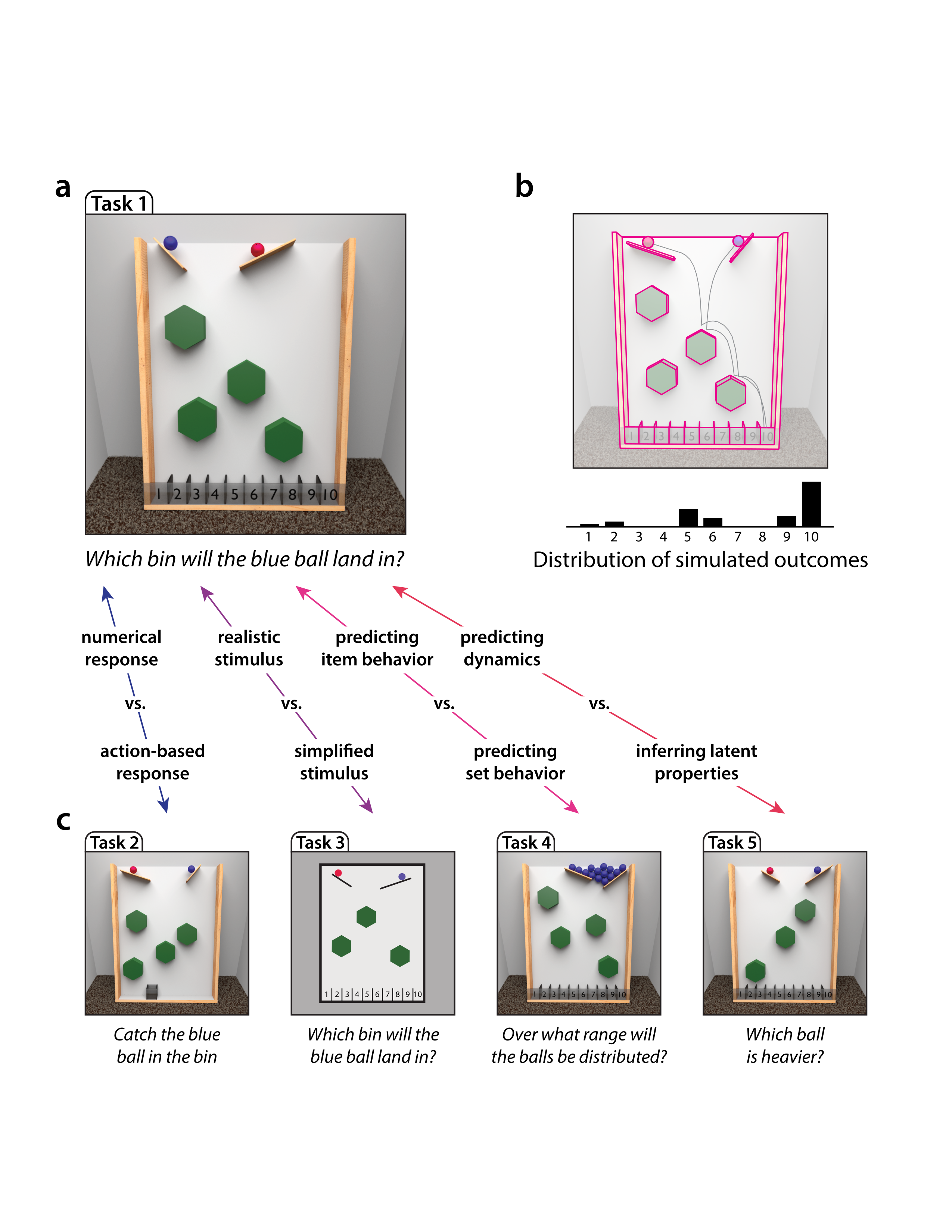
Engaging with everyday environments requires far more than passive perception: it depends on a continuous and highly structured understanding of the physical properties and dynamics that govern the world around us. In daily life, humans effortlessly evaluate how objects rest on and support one another, anticipate how they may be acted upon, and predict how they will behave when they fall, roll, collide, or deform. These judgments are typically fast, intuitive, and remarkably precise, allowing us to plan and execute complex actions in real time. Despite their apparent ease, such abilities rely on sophisticated internal representations and computations that operate largely outside conscious awareness. The presented image illustrates a acientific analysis of intuitive physics cognition paradigms, an experimental framework for studying intuitive physics cognition.Panel (a) shows an experimental configuration consisting of a funnel-shaped device or plinko board, characterized by two vertical wooden side rails and a series of numbered bins (1 to 10) positioned at the base. Inside the device are several objects: a blue ball, a red ball, and four green hexagons serving as obstacles. The crucial question posed is: "Which bin will the blue ball land in?" This setup represents a classic intuitive physics problem requiring understanding of multiple physical principles: gravity and projectile motion, elastic and inelastic collisions, conservation of momentum, and stochastic effects due to small variations in initial conditions. Panel (b) presents crucial empirical data from computational simulations. The bar graph shows the "Distribution of simulated outcomes" across the 10 possible bins. The distribution is non-uniform, showing marked tendencies toward certain bins, with a notable peak at bin 10. This probabilistic distribution reflects the deterministic yet sensitive nature of the physical system. The schematic illustration above the graph shows an idealized representation of the device in pink, highlighting the potential trajectory of the hexagons through the system. This experimental framework has profound implications for cognitive science, providing benchmarks for AI systems' intuitive physics, insights into developmental psychology regarding how children acquire physical understanding, and ground truth data for computational models ranging from probabilistic physics engines to deep neural networks. The methodological structure represents a systematic, multidimensional approach to understanding one of our most fundamental cognitive systems: our capacity to comprehend and predict the physical world around us.
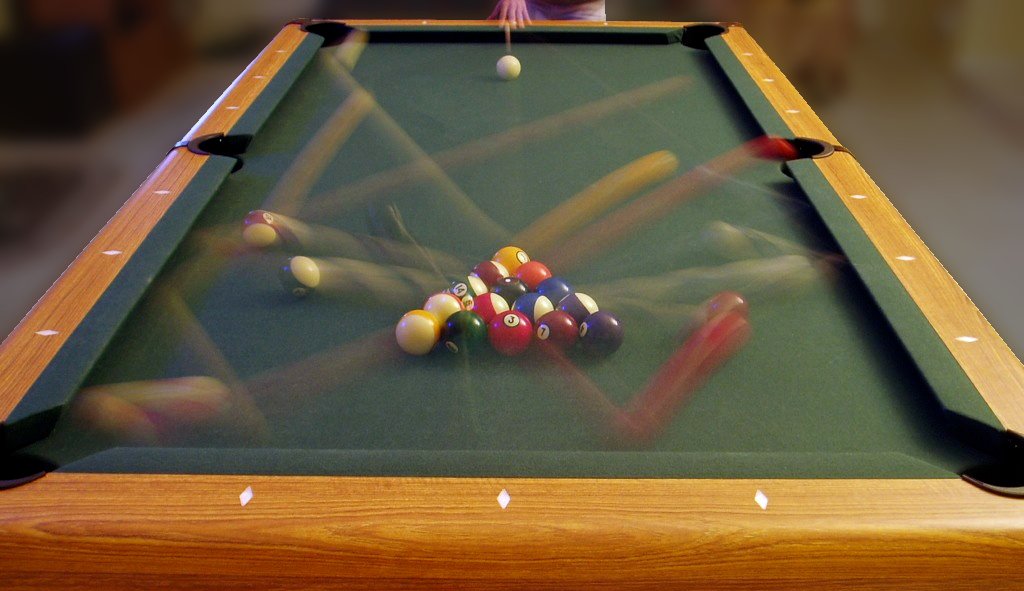
Physical prediction in billiards

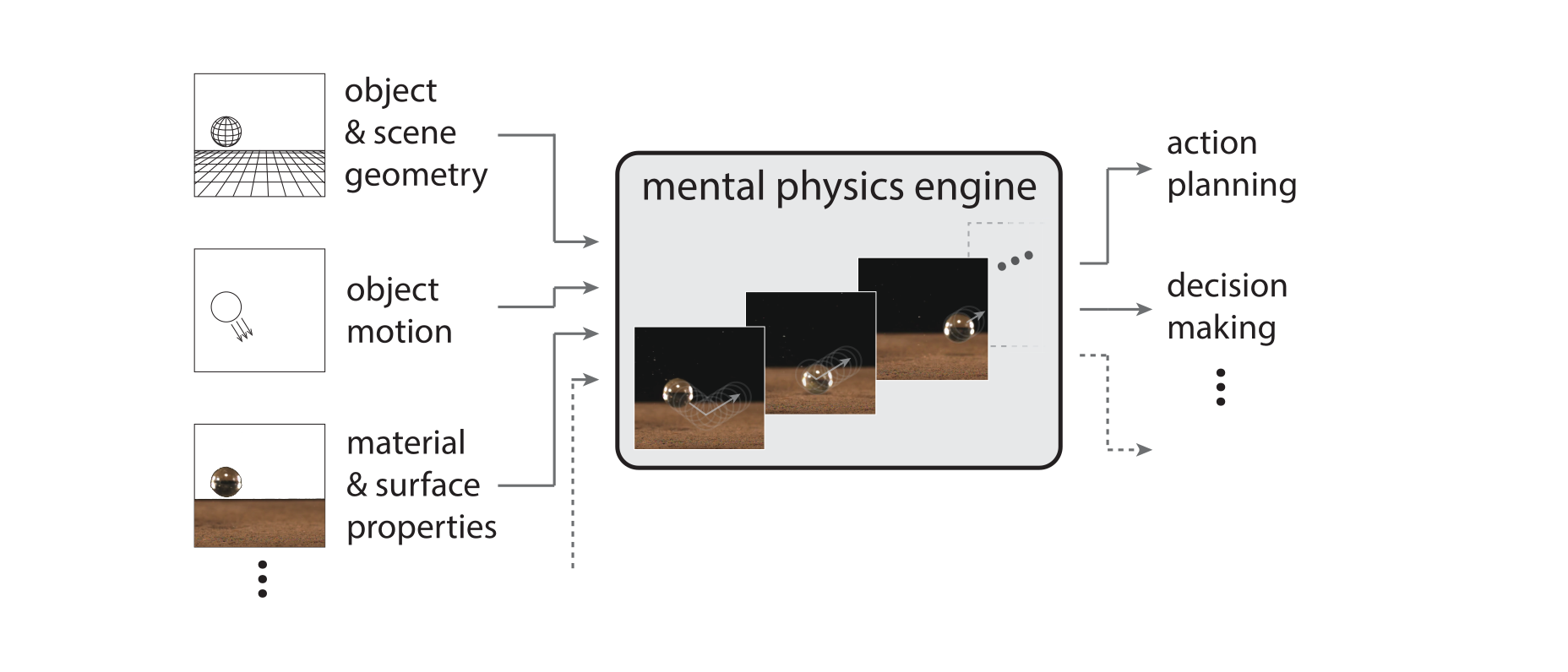
A growing body of research suggests that these competencies are supported by an intuitive physics system—a set of cognitive mechanisms that enable people to reason about physical events in a manner that is approximate, probabilistic, and task-adaptive rather than strictly veridical. Work in cognitive science and neuroscience has increasingly converged on the idea that humans rely on internal generative models of the physical world, sometimes described as a mental physics engine, to simulate and predict physical outcomes. Rather than explicitly calculating physical equations, this system appears to operate by simulating likely future states of the world, integrating perceptual input with prior knowledge and experience.

Research in our lab is aimed at characterizing the mental processes and computations underlying this intuitive understanding of physical structure and dynamics. Specifically, we investigate what kinds of internal operations constitute the core of intuitive physics, how these operations are recruited across different physical scenarios, and how they interact with other cognitive systems. Recent and ongoing work provides evidence that physical reasoning is not monolithic, but instead relies on a flexible combination of perceptual analysis, memory-based expectations, and simulation-like processes that are dynamically modulated by task demands and context.
Balance and stability

Dedicated Cognitive Resources

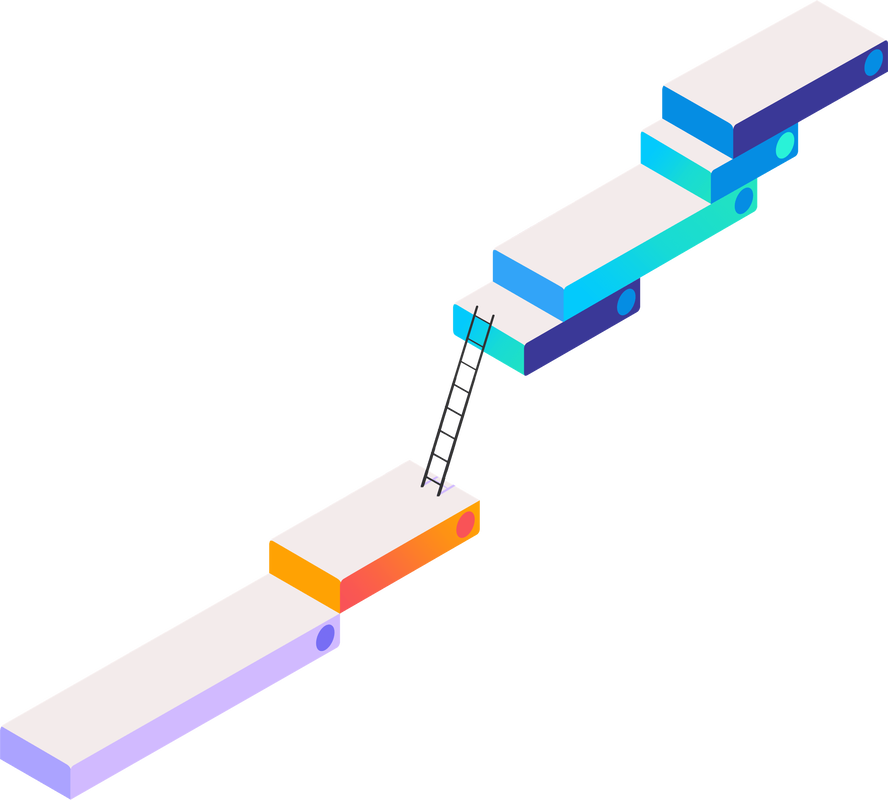
One central question concerns whether there are dedicated cognitive resources for intuitive physics. Behavioral and neurocognitive evidence suggests that reasoning about physical events engages partially specialized mechanisms that are distinct from, yet closely integrated with, systems for perception, attention, and action planning. Predictive processing of object interactions can occur rapidly and sometimes independently of explicit attentional focus, while still being influenced by top-down goals and expectations. This raises the possibility that intuitive physics relies on domain-specific representations that are nevertheless embedded within broader perceptual, cognitive architectures. This image presents an abstract, isometric visualization that conceptualizes hierarchical knowledge structures or multi-level learning pathways, commonly used in educational technology, artificial intelligence systems, or organizational knowledge management frameworks.

Computational Structure

Another key line of inquiry addresses the computational structure of the intuitive physics system. Are there mental algorithms tailored to specific classes of events, such as collisions or balance, or to specific types of materials, such as rigid bodies, fluids, or deformable objects like cloth? Evidence from both vision research and action-related studies suggests that different physical properties may be processed with varying degrees of abstraction and sensory grounding.The core of the system is the mental physics engine itself, visualized through a sequence of frames showing a metallic sphere's trajectory across a surface with black rectangular obstacles. This temporal sequence represents the engine's primary function: simulating physical dynamics forward in time.
Fluid dynamics

Embodied and Multimodal Representations

Our work also explores how physical reasoning is grounded in embodied interactions with the world. Studies have demonstrated that participants adopt control strategies consistent with Newtonian physics when using natural, sensorimotor interactions, but resort to simpler heuristics when interactions are more abstract. This suggests that the format of interaction, whether embodied or symbolic, fundamentally shapes the nature of physical reasoning.This diagram illustrates the architectural framework of a mental physics engine, a computational model that simulates how humans internally represent and predict physical phenomena to support action and decision-making in real-world environments.

Development and Evolution

Our work also explores how intuitive physics abilities change across the lifespan and with experience. Extensive training in perceiving and predicting specific physical scenarios, such as planning a billiards shot, balancing objects on a tray, or anticipating the movement of tools, can lead to measurable improvements in physical reasoning. A crucial question is whether such improvements reflect fine-tuning of general-purpose simulation mechanisms or the acquisition of more specialized representations tied to particular contexts.

Interactions with Perception and Memory

Finally, an important focus of our research concerns how intuitive physics interacts with perception, attention, and memory. Physical predictions are deeply intertwined with perceptual representations: sensory input constrains simulation, while prior knowledge and expectations shape how physical scenes are interpreted. Understanding how intuitive physics is embedded within these broader representational systems is essential for explaining how humans achieve such robust and adaptive interactions with the physical world. This contribution has applications in robotics (enabling machines to predict physical interactions), virtual reality (creating more intuitive interfaces), developmental psychology (understanding how children acquire physical knowledge), and artificial intelligence (building systems with human-like common sense about the physical world).
Publications

This page collects publications related to research on intuitive physics and physical reasoning. The work presented here investigates how humans perceive and predict physical events, form expectations about object interactions, and use physical knowledge to guide action in everyday environments. Using primarily behavioral and cognitive approaches, these studies examine the interaction between perceptual input, prior experience, and predictive mechanisms in shaping physical understanding. Together, these publications contribute to a broader account of how intuitive knowledge of the physical world is structured, learned, and applied across different tasks and contexts.

© Copyright Notice

All publications listed on this page are protected by copyright and are provided solely for academic and scientific purposes. These materials are made available to facilitate research, scholarship, and education. Any reproduction, distribution, or commercial use of these works without proper authorization from the copyright holders is strictly prohibited. Users are expected to comply with applicable copyright laws and respect the intellectual property rights of the authors and publishers. For permissions beyond fair use, please contact the respective copyright holders directly.

Visual simulation: Catching a glimpse of what's to come

2025
Fischer, J.
Current Biology, 35(1), R21-R23

Physical reasoning is the missing link between action goals and kinematics

2024
Fischer, J.
Physics of Life Reviews, 48, 198-200

A dedicated mental resource for intuitive physics

2024
Mitko, A., Navarro‐Cebrián, A., Cormiea, S., & Fischer, J.
iScience, 27(1)

Do striking biases in mass inference reflect a flawed mental model of physics?

2023
Mitko, A. & Fischer, J.
Journal of Experimental Psychology: General, 152(9), 2636-2650

Odor discrimination is immune to the effects of verbal labels

2023
Cormiea, S. & Fischer, J.
Scientific Reports, 13(1742)

Precise functional connections from the dorsal anterior cingulate cortex to the intuitive physics network in the human brain

2022
Navarro-Cebrian, A. & Fischer, J.
European Journal of Neuroscience, 56(1)

What tool representation, intuitive physics, and action have in common: The Brain's First-Person Physics Engine

2022
Fischer, J., & Mahon, B. Z.
Cognitive Neuropsychology, 38(07–08)

The building blocks of intuitive physics in the mind and brain

2022
Fischer, J.
Cognitive Neuropsychology, 38(07–08)

A Survey on Machine Learning Approaches for Modelling Intuitive Physics

2022
Duan, J., Dasgupta, A., Fischer, J., & Tan, C.
International Joint Conferences on Artificial Intelligence Organization-ECAI2022

When it all falls down: the relationship between intuitive physics and spatial cognition

2020
Mitko, A. & Fischer, J.
Cognitive Research: Principles & Implications, 5(24)

Naïve physics: building a mental model of how the world behaves

2020
Fischer, J.
In Poeppel, D., Mangun, G. R., & Gazzaniga, M. S. (Eds.) The Cognitive Neurosciences VI, pp. 777-783

Knowledge of objects' physical properties implicitly guides attention during visual search

2020
Guo, L., Courtney, S. M., & Fischer, J.
Journal of Experimental Psychology: General, 149(12), 2332–2343

Functional neuroanatomy of intuitive physical inference

2016
Fischer, J., Mikhael, J. G., Tenenbaum, J. B., & Kanwisher, N.
Proc. Natl. Acad. Sci. U.S.A., 113(34):E5072–E5081

Unimpaired attentional disengagement in toddlers with autism spectrum disorder

2016
Fischer, J., Smith, H., Martinez‐Pedraza, F., Carter, A. S., Kanwisher, N., & Kaldy, Z.
Developmental Science, 19(6): 1095–1103

Serial dependence in the perception of faces

2014
Liberman, A., Fischer, J., & Whitney, D.
Current Biology, 24(21):2569–2574

Serial dependence in visual perception

2014
Fischer, J. & Whitney, D.
Nature Neuroscience, 17:738–743

The Hierarchical Sparse Selection Model of Visual Crowding

2014
Chaney, W., Fischer, J., & Whitney, D.
Frontiers in Integrative Neuroscience, 8:73

Ensemble Crowd Perception: A Viewpoint-Invariant Mechanism to Represent Average Crowd Identity

2014
Yamanashi Leib, A., Fischer, J., Liu, Y., Qiu, S., Robertson, L., & Whitney, D.
Journal of Vision, 14:26

Unimpaired Attentional Disengagement and Social Orienting in Children with Autism

2014
Fischer, J.*, Koldewyn, K.*, Jiang, Y.V., & Kanwisher, N.
Clinical Psychological Science, 2(2):214–223

Motion-dependent representation of space in area MT+

2013
Maus, G.W., Fischer, J., & Whitney, D.
Neuron, 78(3):554–562

Attention gates visual coding in the human pulvinar

2012
Fischer, J. & Whitney, D.
Nature Communications, 3:1051

Crowd Perception in Prosopagnosia

2012
Yamanashi Leib, A., Puri, A., Fischer, J., Bentin, S., Whitney, D., & Robertson, L.
Neuropsychologia, 50(7):1698–1707

Object-level visual information gets through the bottleneck of crowding

2011
Fischer, J. & Whitney, D.
Journal of Neurophysiology, 106(3):1389–1398

The emergence of perceived position in the visual system

2011
Fischer, J., Spotswood, N, & Whitney, D.
Journal of Cognitive Neuroscience, 23(1):119–136

Perceived positions determine crowding

2011
Maus, G.W., Fischer, J., & Whitney, D.
PLoS ONE, 6(5): e19796

Facilitating Stable Representations: Serial Dependence in Vision

2011
Corbett, J., Fischer, J., & Whitney, D.
PLoS ONE, 6(1): e16701

Attention narrows position tuning of population responses in V1

2009
Fischer, J. & Whitney, D.
Current Biology, 19(16):1356–1361

Precise discrimination of object position in the human pulvinar

2009
Fischer, J. & Whitney, D.
Human Brain Mapping, 30(1):101–111

Participate in Our Research

Your participation directly advances our understanding of one of the mind's most fascinating capabilities.

Why Participate

Why Participate?

Contribute to cutting-edge cognitive science research and gain exclusive insight into how your brain makes sense of physics.

What to Expect

What to Expect

View dynamic scenes, make intuitive judgments, engage with innovative experiments. Sessions typically last 30-60 minutes.

Compensation

Compensation

Receive course credit or monetary compensation, plus a summary of research findings showing how your data contributes.

Get Involved

Ready to contribute to groundbreaking research?

dynamic.perception.lab.coimbra@gmail.com

Lab Journal Club

Access our bi-weekly discussions on cutting-edge research in intuitive physics and cognitive neuroscience.

Schedule & Format

Frequency: Every other Thursday

Time: 3:00 PM CET

Duration: ~1 hour

Format: One presenter + discussion

Join Our Next Session

Zoom Link: Join our next session

No registration required

Reading List & Past Discussions

Explore our complete archive of discussed papers, presenter notes, and upcoming topics.

View on GitHub →

Cognitive Neuroscience Training Guide

A comprehensive roadmap for learning cognitive neuroscience, fMRI, and neuroimaging data analysis.

Online Generalistic Guides

Coursera - Principles of fMRI

Alternative: Videos also available on YouTube:

COGNESTIC Support Materials

Cognitive Neuroimaging Skills Training In Cambridge

Comprehensive Online Guides

Andy's Brain Book

Comprehensive guide covering cognitive neuroscience theory and tutorials for multiple neuroimaging software programs (SPM, FSL, AFNI, FreeSurfer).

Dartbrains

Introduction to in vivo neuroimaging using fMRI and Python-based data analysis. Excellent for learning modern, open-source workflows.

Experiment Design

Theory

Design Efficiency in fMRI

MRC CBU guide addressing how to design efficient fMRI experiments for optimal statistical power.

Software

PsychoPy

Open-source Python package for running behavioral and neuroimaging experiments. Industry standard for stimulus presentation.

Data Organization

BIDS Format (Brain Imaging Data Structure)

Simple and intuitive standard for organizing neuroimaging data. Essential for:

  • Contributing to open science
  • Ensuring reproducibility
  • Using automated preprocessing pipelines

fMRI - Theoretical Background

Essential Textbook

"Functional Magnetic Resonance Imaging"

Scott A. Huettel, Allen W. Song, and Gregory McCarthy

The definitive textbook on fMRI, covering physics, experimental design, and analysis methods.

Key Paper

"The physics of functional magnetic resonance imaging (fMRI)"

Comprehensive review of the physical principles underlying fMRI signal generation and acquisition.

Preprocessing fMRI Data

fMRIPrep

fMRIPrep Documentation

Robust preprocessing pipeline for task-based and resting-state fMRI. Minimal user input, maximal reproducibility.

Demonstration

Andy's Brain Book - fMRIPrep Tutorial

Step-by-step demonstration using publicly available datasets.

Processing fMRI Data

Programming Languages

Unix/Shell

Essential for command-line tools

MATLAB

For SPM and traditional tools

Python

Modern, versatile, open-source

Basic: Univariate Analysis Tools

MATLAB-based
SPM (Statistical Parametric Mapping)

Gold standard for fMRI analysis. Comprehensive suite for preprocessing, modeling, and statistical inference.

Python-based
  • Nilearn

    Machine learning for neuroimaging

  • Nipype

    Interface to multiple analysis tools

Advanced: Multivariate Analysis

Multi-Voxel Pattern Analysis (MVPA)
COGNESTIC Materials

Linked at beginning of guide. Excellent hands-on tutorials for pattern classification.

Representational Similarity Analysis (RSA)

Have a resource suggestion? Let us know!

Ongoing Studies

We are currently recruiting participants for the following research studies. If you are interested in contributing to scientific research and gaining first-hand experience in experimental studies, we would be delighted to have you join us. Your participation plays a fundamental role in advancing our understanding of the human mind and brain. Join us!

Active Research Studies

Your contribution helps advance our understanding of intuitive physics and visual cognition. All studies are approved by the University of Coimbra Ethics Committee.

• Actively Recruiting

Physical Prediction in Dynamic Scenes

Study Focus: x

Duration: x

Location: x

Compensation: x

Requirements: x

Progress: x participants enrolled

Express Interest →
• Actively Recruiting

Visual Processing of Stability Judgments

Study Focus: x

Duration: x

Location: x

Compensation: x

Requirements: x

Progress: x participants enrolled

Express Interest →

How to Participate

Click "Express Interest" on any study above to send us an email with your details. We'll respond with study information, scheduling options, and consent forms. You can withdraw at any time without penalty.

Frequently Asked Questions

What happens to my data?

All data is anonymized and stored securely according to GDPR regulations. Your personal information is kept confidential and used only for research purposes. You will receive a summary of findings showing how your data contributed to science.

Can I withdraw from a study?

Yes, absolutely. You can withdraw at any time during or after the session without penalty or explanation. Your data will be deleted upon request.

How do I get compensated?

Monetary compensation is provided immediately after the session via bank transfer or cash. Course credit is processed through your university's system within one week of participation.

What if I can't complete the full session?

No problem! You will still receive compensation proportional to yout effort.

Have Questions About Participating?

We're here to help! Contact us for more information.

Contact Research Team
TMSLab

TMS Lab Coordination

Transcranial Magnetic Stimulation (TMS) is a non-invasive technique used in neuroscience to study and modulate brain activity. It works by placing a magnetic coil over the scalp, which generates brief magnetic pulses that pass painlessly through the skull and induce small electrical currents in the underlying cortical tissue. These currents can temporarily activate or inhibit specific brain regions, allowing researchers to investigate the causal role of those areas in perception, movement, language, or cognition more broadly. Unlike neuroimaging methods that primarily measure brain activity, TMS can directly interfere with or enhance neural processing, making it a powerful tool for understanding brain–behavior relationships. In clinical contexts, TMS is also used therapeutically, for example in the treatment of depression, where repeated stimulation protocols can produce longer-lasting changes in neural excitability and network dynamics. In our research setting, the laboratory acts as the central coordinating unit for all TMS-related activities. This means that our lab is responsible not only for operating the Transcranial Magnetic Stimulation equipment, but also for ensuring that protocols are scientifically sound, ethically approved, and safely implemented. We oversee the planning of stimulation parameters, participant screening procedures, and compliance with international safety guidelines. Additionally, we provide methodological support and training to collaborators who wish to integrate TMS into their experimental designs. By serving as the coordinating hub for TMS, our lab ensures consistency across studies, maintains high technical standards, and promotes rigorous investigation of brain–behavior relationships.

Safety Policies & Documents

Download essential safety documentation, protocols, and guidelines for TMS equipment use.

TMS Safety Manual

Comprehensive guide covering equipment operation, safety protocols, contraindications, and emergency procedures.

Equipment Use Policy

Official policies for TMS equipment access, scheduling priorities, training requirements, and user responsibilities.

Quick Reference Guide

One-page summary of essential safety checks, contraindications, and emergency contact information.

Consent & Liability Forms

All TMS equipment users must complete and submit these forms before equipment access is granted.

Required

TMS User Agreement

Acknowledgment of training completion, understanding of safety protocols, and agreement to follow equipment use policies.

Format: Digital & Print

Processing: 2-3 business days

Required - Each Session

TMS Safety Screening

Pre-session medical screening to identify contraindications and ensure participant safety. Must be completed before each TMS session.

Important: Complete 24h before session

Validity: Single session only

How to Submit Forms

Option 1: Complete online forms and submit digitally
Option 2: Download PDFs, print, sign, and deliver to lab office
Option 3: Email scanned signed forms to dynamic.perception.lab.coimbra@gmail.com

Questions about forms? Contact: dynamic.perception.lab.coimbra@gmail.com

Equipment Scheduling Calendar

View availability and reserve TMS equipment time slots for your research sessions.

TMS Equipment Booking System

Our shared calendar system allows authorized users to view current bookings and reserve equipment time. Access requires completed safety training and approved liability forms.

Access Required

Approved users only

Operating Hours

Mon-Fri: 9:00-18:00

Booking Notice

Minimum 48h advance

Access Scheduling Calendar

Need calendar access? Contact dynamic.perception.lab.coimbra@gmail.com

Questions About TMS Equipment Access?

Our TMS Lab Coordinator is here to help with documentation, training, and scheduling.

Contact TMS Lab Coordinator
Coimbra, Portugal

Visit Our Lab in Coimbra, Portugal

University of Coimbra • Department of Psychology

We are located at Colégio de Jesus, next to the Science Museum of the University of Coimbra, Coimbra, Portugal.

You can reach us by:

LABORATORY ADDRESS

University of Coimbra

Faculty of Psychology and Educational Sciences

Rua do Colégio Novo

3000-115 COIMBRA

PORTUGAL

GENERAL E-MAIL

cogscistudies@gmail.com

JASON FISCHER, DIRECTOR

E-mail: cogscistudies@gmail.com

SCIENCE COMMUNICATION AND PROJECT MANAGEMENT

Jason Fischer: cogscistudies@gmail.com